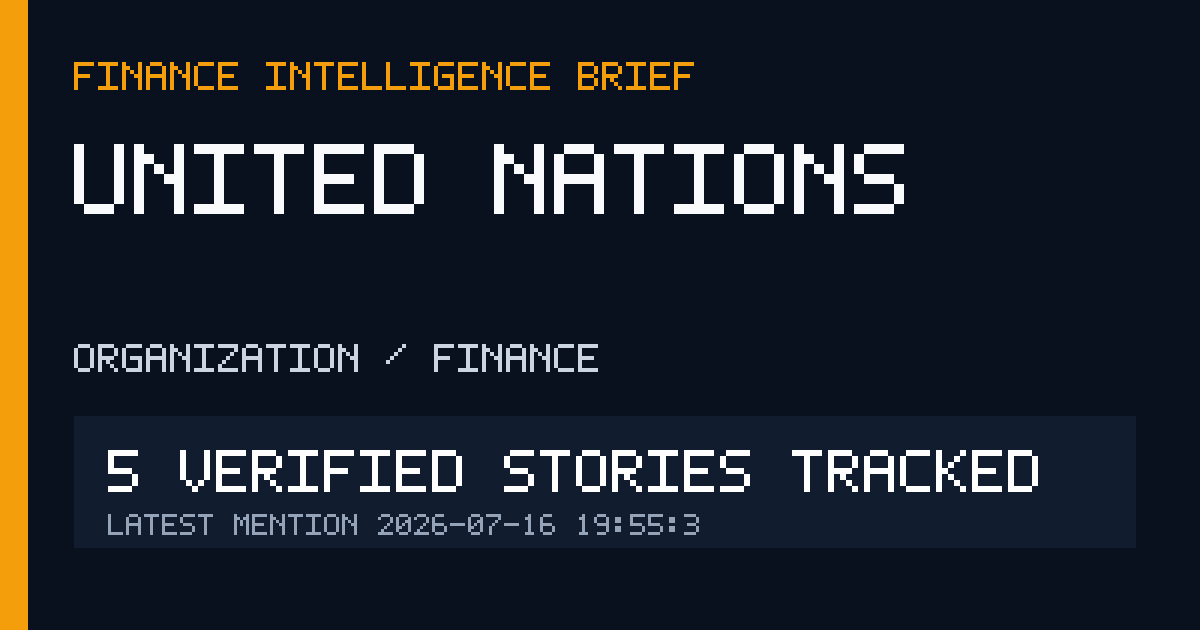
Negative sentiment reaches 80% here, compared with 28% across the 2185-story beat baseline for the same window. Iran is the most frequent co-covered peer, appearing in 3 of the 5 tracked stories. Each story carries 8.2 original sources on average, compared with 2.9 for the broader beat in this window.
Figures are computed live from our source-verified story record
— see our methodology for how impact and
sentiment are derived.
What the coverage shows about United Nations
Negative sentiment reaches 80% here, compared with 28% across the 2185-story beat baseline for the same window. Iran is the most frequent co-covered peer, appearing in 3 of the 5 tracked stories. Each story carries 8.2 original sources on average, compared with 2.9 for the broader beat in this window. The 129-day window averages about 0.3 stories each week. At 6.6, the average consequence score sits above the same-window beat average of 6.4. The clearest coverage concentration is commodities: 2 of 5 stories, with the rest divided among 2 other categories. This profile follows 5 Finance stories mentioning United Nations across the period from March 10, 2026 to July 16, 2026.
Stories tracked
5
Per week
0.3
Negative
80%
Sources per story
8.2
Computed from the 5 stories linked to this entity, with beat comparisons drawn from all 2185 Finance stories published in the same date window. Shares are omitted below five stories and comparisons below a twenty-story baseline.
Coverage cohort
Appears alongside
Other entities that clear the same relevance threshold in stories also covering United Nations. Shared-story counts are live from our verified record — not editorial picks.
UN Women publishes report documenting that at least 1 million women and girls have lost life-saving support due to record aid funding cuts, with 40% of women's organizations at risk of imminent closure.
The U.S. naval blockade and 20% tariff on Strait of Hormuz cargoes have sent crude oil prices soaring, threatening global economic stability and ratcheting up inflation risks for investors and policymakers.
The largest drop in international aid funding on record is triggering a fiscal collapse among women’s organizations, with 40% at immediate risk of shutting down. The funding vacuum threatens economic stability in fragile states and erodes development returns.
Stalled UN climate talks triggered procedural rule 16, delaying key decisions to COP31, while the US-Iran interim agreement to reopen the Strait of Hormuz sent oil prices tumbling and eased the global energy crisis. The diplomatic gridlock clouds carbon market regulations, and cheaper oil may dampen the near‑term urgency for clean‑energy investments.
For investors and fiscal policymakers, the demographic shift across six Eastern Caribbean nations threatens long-term growth, pension solvency, and sovereign credit profiles. Declining working-age populations and rising dependency ratios will force tough choices on taxation, retirement ages, and immigration.
The conflict in Iran has triggered a global energy crisis, forcing a choice between accelerated renewable adoption for energy security or a regressive return to fossil fuels. While UN leadership views the turmoil as an 'exit ramp' from volatile oil markets, skeptics warn that immediate security needs often favor dirtier, established fuels like coal.
United Nations is linked from 5 stories on this site, each scored at or above our 35% relevance threshold — see how these pages are built.
See something wrong on this page — a misattributed entity, a wrong stat, a broken source
link? Report a data issue.